


How to Pack Fragile Items for Moving: Tips & Mistakes
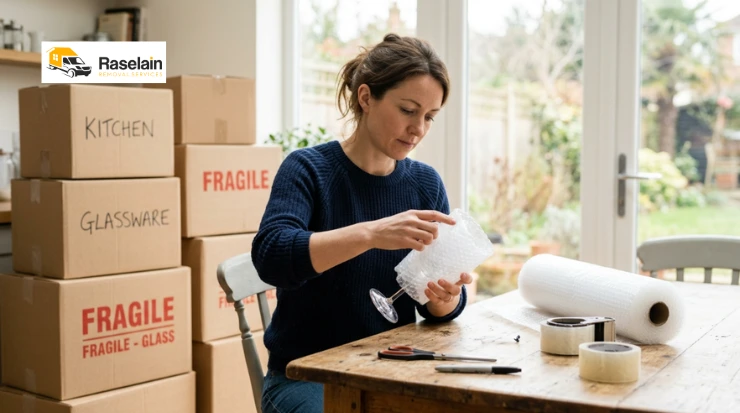
Packing is one of the most important parts of any house move, yet it is also one of the most commonly overlooked. Many items that arrive damaged at a new home are not broken by the journey itself, but by improper packing before the move even began.
At Raselain Removal Services LTD, we have helped hundreds of families relocate across the UK and have seen firsthand how proper packing can prevent unnecessary damage, stress, and costly replacements. Whether you are packing fragile glassware, electronics, furniture, or everyday household items, using the right materials and techniques can make a significant difference.
In this guide, we explain how to pack for a move safely and efficiently, including the best packing materials to use, step-by-step packing methods for different items, and common mistakes that can lead to damage in transit.
Why Fragile Items Break During a Move
Most breakages are not caused by careless movers. They are caused by poor packing before the van even leaves the driveway. The three culprits are almost always:
- Empty space inside the box — items shift during transit and collide with each other
- Wrong box size — large boxes create too much room for movement and attract heavy items being placed on top
- Skipping individual wrapping — stacking unwrapped items directly against each other is the fastest route to chips and cracks
Understanding this changes how you approach the whole process. Every decision you make, box size, wrapping layers, cushioning depth, should be aimed at keeping each item completely immobilised.
The Essential Fragile Item Packing Materials
Before you touch a single breakable, gather all your supplies first. This is a step most people skip. They start wrapping and then realise halfway through that they have run out of bubble wrap or are using the wrong type of box.
The right fragile item packing materials are not expensive. Spending a small amount on proper supplies before moving day can save you from replacing items that cost far more.
Bubble Wrap
Bubble wrap is the most reliable cushioning material for glassware, ceramics, and electronics. The air-filled bubbles absorb impact and vibration during transit. For anything valuable or oddly shaped, always use a double layer a single layer compresses quickly under pressure and may not be enough on its own.
Packing Paper
Packing paper is used as the first wrap layer, placed directly against the surface of an item before bubble wrap goes on top. It is ideal for dishes, mugs, and bowls. Many people reach for old newspapers instead, but printed newspapers transfer ink directly onto china and glassware, leaving stains that are difficult to remove. Always use plain, unprinted packing paper.
Foam Sheets
Foam sheets are thin, flexible, and offer reliable surface protection without adding bulk. They are the best choice for artwork, picture frames, and flat or smooth-surfaced items. They are also useful for stacking between plates to prevent scratching during transit.
Small and Medium Sturdy Boxes
Box size matters more than most people realise. Large boxes create too much empty space, which allows items to shift and collide during the journey. They also invite heavier objects to be placed on top of breakables.
Smaller and medium boxes are the correct choice for fragile items. They limit movement, are easier to handle with care, and are far less likely to be overloaded. Always check the box is strong; never use worn, damp, or previously crushed boxes.
Packing Tape
Good quality packing tape does two important jobs. It holds your wrapping securely in place so it does not loosen during transit, and it gives the box itself structural strength at the base and seams. Use it generously along all edges and flaps. Avoid basic sellotape or masking tape; neither is strong enough for a moving box.
Packing Peanuts or Crumpled Paper
Once your wrapped items are placed inside the box, empty space almost always remains. That gap is a problem it allows items to shift and knock against each other during the journey. Packing peanuts or crumpled paper fills these voids completely. The box should feel firm and solid when you press the sides before sealing it.
Corner Protectors
Corners and edges are the most vulnerable points on picture frames, mirrors, and framed artwork. Corner protectors are small foam or cardboard guards that slot over each corner before wrapping begins. Without them, even a single knock during loading can chip or crack an edge. They are inexpensive and make a real difference to how well frames survive a move.
How to Pack Fragile Items: Room by Room
Not everything breaks in the same way, so it should not all be packed in the same way. Here is how to handle the most common fragile items in your home.
Glassware and Mugs
Start by stuffing crumpled packing paper inside each glass to give it internal support and reduce pressure on weak points. Then wrap the outside with packing paper, followed by bubble wrap.
Always pack glasses upright, never on their sides. They are stronger vertically and less likely to crack during transit. A dish box with cell dividers works best, as each glass has its own compartment. Line the bottom of the box with three to four inches of crumpled paper and repeat the same at the top before sealing.
Plates and Bowls
Stacking plates flat is one of the most common mistakes and often leads to chips and cracks. Wrap each plate individually, stack no more than five together, then wrap the bundle in bubble wrap. Place them vertically on their side inside the box, as this position handles pressure and movement more effectively than lying flat.
Electronics
Use the original box if available, as it offers the best protection. If not, wrap items in anti-static bubble wrap rather than standard bubble wrap, which can generate static and potentially damage screens and circuits. Remove batteries, wrap cables separately, and make sure there is cushioning on all six sides of the box. Label it clearly as ELECTRONICS, THIS SIDE UP.
Picture Frames and Mirrors
Attach corner protectors first, as corners are the most vulnerable part. Wrap the frame in packing paper, then add bubble wrap over it. Place cardboard sheets on both sides before boxing. Always stand frames upright in the box, never flat. For large mirrors, use a specialist mirror box with foam padding on all interior sides.
Lamps and Light Fittings
Disassemble everything before packing. Remove the bulb and separate the shade from the base. Wrap the base in bubble wrap and pack it upright. Place the shade in its own box and fill all empty space with crumpled paper. Never place anything on top of a lampshade box, even briefly, as the shape can be crushed and is difficult to restore.
The Packing Method That Professionals Use
Once every item is individually wrapped, the way you load the box is just as important as the wrapping itself. Most damage happens not because of poor wrapping but because items were placed inside a box without any system. Professional packers follow a simple layered method that keeps every item secure from the bottom of the box to the top.
Step 1 — Create a Base Layer
Before placing anything inside, line the bottom of the box with at least three inches of crumpled packing paper or packing peanuts. This base layer acts as a cushion that absorbs impact if the box is set down heavily or shifted during loading. Skipping this step means your wrapped items are sitting directly on hard cardboard with nothing to absorb the shock.
Step 2 — Place the Heaviest Items First
Heavier wrapped items always go in first, sitting on top of the base layer. Lighter and more delicate pieces go in last, on top. This keeps the weight distribution stable and prevents heavier items from pressing down on fragile ones during the journey. Never place a heavy item on top of a lighter one inside the same box.
Step 3 — Fill Every Gap as You Go
After placing each item, fill the space around it with crumpled paper before adding the next piece. Do not wait until the box is full to fill the gaps pack around each item as you go. When you press gently on the box walls, nothing inside should be able to move. Any empty space is a risk.
Step 4 — Create a Top Layer
Once all items are packed, add another generous layer of crumpled paper or packing peanuts across the top before sealing. The contents should sit just below the top of the box if items are pressing against the lid, the box is overpacked, and the lid will not close flat, which weakens the seal.
Step 5 — Always Do the Shake Test
Before taping the box shut, lift it and give it a gentle shake. If you hear or feel anything moving inside, open it and add more padding. This simple test takes ten seconds and catches problems before they become broken items. If the box feels solid and silent, it is ready to seal.
This layered approach is what separates a properly packed box from a rushed one. It takes a few extra minutes per box, but it is the single most effective way to protect your fragile items during a move
Common Packing Mistakes That Cause Breakages
Even with the right materials and good intentions, a few simple mistakes can undo all your effort. Most breakages on moving day are not accidents they are the result of avoidable errors made during packing. Here are the most common ones to watch out for.
Using Large Boxes for Fragile Items
Large boxes create too much empty space and attract heavy items being packed alongside breakables. Always use small or medium boxes for fragile items they are easier to control and far less likely to be overloaded.
Leaving Empty Space Inside the Box
Any gap inside a box allows items to shift and collide during transit. It does not matter how well each item is individually wrapped if there is empty space, there is risk. Fill every void with crumpled paper or packing peanuts before sealing.
Relying on a Single Layer of Wrap
One layer of bubble wrap is often not enough for genuinely fragile items. Always wrap in packing paper first as a base layer, then add bubble wrap on top. Two layers take an extra minute and make a significant difference.
Packing Fragile Items Last
When fragile items are left until the end, they get rushed. Rushed packing means loose wrapping, overfilled boxes, and shortcuts that cause damage. Always pack your most delicate items first, when you still have time, space, and patience.
Skipping the Shake Test
Sealing a box without testing it is one of the easiest mistakes to make and one of the easiest to avoid. Give every box a gentle shake before taping it shut. If anything moves inside, it needs more padding. Ten seconds of testing can prevent a breakage.
When to Use Professional Packing Services
Some items, such as antiques, high-value artwork, large mirrors, or specialist electronics, are simply too valuable to risk with DIY packing. If you are unsure, the cost of professional packing is almost always less than the cost of replacing a damaged item.
If you are based in North London and looking for packing services in Enfield, Raselain Removal Services LTD offers full packing support alongside our removal service. Our team brings all the materials, handles every item with care, and ensures your belongings are loaded and transported properly so you do not have to worry about a thing on moving day.
Quick Checklist Before Moving Day
- All glassware is wrapped individually and packed vertically
- Plates packed on their side, not flat
- Electronics in anti-static wrap with batteries removed
- Frames and mirrors standing upright with corner protectors
- Every box passes the shake test
- “FRAGILE” and “THIS SIDE UP” are marked on three sides of each box
- Heavy items packed at the bottom, lighter items on top
- Dedicated boxes for fragile items nothing heavy mixed in
Final Thoughts
Packing fragile items is not about using more bubble wrap it is about using the right materials in the right order, choosing the right box size, and eliminating every source of movement during transit. Follow the steps in this guide, and you will dramatically reduce the risk of anything arriving damaged.
If you would rather leave it to the professionals, Raselain Removal Services LTD is here to help. From full packing services in Enfield to nationwide removals, we handle your belongings as if they were our own.
Frequently Asked Questions
Q. Can I use newspaper instead of packing paper for fragile items?
A newspaper can wrap items, but it is not a good choice. The ink from the newspaper transfers onto china, glassware, and ceramics, leaving permanent stains on the surface. Always use plain, unprinted packing paper. It is safer and leaves no marks.
Q. Should I pack fragile items myself or let the removal company do it?
If your items are very valuable, such as antiques, paintings, or family heirlooms, professional packing is the safer choice. There is also an important practical reason: if the removal company packed the item and it breaks, they are responsible. If you packed it yourself, most companies will not cover the damage.
Q. What is the safest way to move a TV without the original box?
Never lay a TV flat. Always keep it upright and vertical. Use a specialist TV moving box, wrap the screen in anti-static bubble wrap, and make sure nothing heavy can press against it inside the moving van. A TV lying flat on its back is far more likely to crack during the journey.
Q. Can I use clothes or towels instead of bubble wrap to save money?
Yes, for lighter, fragile items, soft clothing such as t-shirts, jumpers, and towels can work as basic padding and help reduce costs. However, for heavier or high-value items like crystal glassware or antiques, proper bubble wrap cannot be replaced by soft fabric, which shifts and compresses during transit and does not offer the same protection.
Q. Does moving insurance cover broken, fragile items?
It depends entirely on the policy. Basic removal cover usually pays out based on the weight of an item rather than its actual value, which means expensive, fragile items are often severely undercompensated. If you own valuable china, artwork, or antiques, it is worth taking out separate full replacement value insurance and confirming the details with your removal company before moving day.

Raselain Removal Services LTD is a trusted Enfield removals company with years of experience providing reliable home and office moving services across the UK and Europe. From packing and transport to storage and disposal, our team delivers safe, smooth, and stress-free removals tailored to every customer.
Quick Links
Newsletter Subscription
© 2024 Raselain Removal Services LTD. All rights reserved.